
FLAGSHIP
View MethodologyRed Teaming
Full-scope adversarial emulation targeting people, processes, and tech.

Attackers don't read your policy documents — they probe your applications, networks, and people until something gives. SXGuard's offensive team does the same, on your side, before the real adversary does.
A team of certified offensive security specialists (OSWE, OSCP+, OSWP, and more) with a track record across fintech, blockchain, government, and enterprise environments — delivering a clear, prioritized picture of your real-world risk and a practical path to fixing it, with Swiss standards of accountability and neutrality.
Access to source code and engineering teams for complete coverage.
Our methodology is shaped by how top-tier EDRs and SOCs detect attacks.
Core team regularly publishes CVEs and performs independent research.
High-level risk communication alongside technical exploitation details.
Not just findings—remediation advice that actually fits your architecture.
Flexible scoping designed for startups to multinational infrastructure.
A comprehensive breakdown of modern offensive security testing — from full-scope adversary simulation to targeted application and infrastructure assessments.
Full-scope adversarial emulation targeting people, processes, and tech.
In-depth assessment of web applications using OWASP Top 10+.
Securing the logic layer of your services and integrations.
Testing iOS and Android apps for local and server-side flaws.

For AWS, Azure, and GCP — targeting the misconfigurations that cause breaches: over-permissive IAM roles, insecure storage buckets, and tenant-to-tenant escalation.

External: testing your perimeter — firewalls, VPNs, DNS. Internal: simulating a foothold inside the office, focusing on lateral movement, privilege escalation, and Active Directory security.
Audit smart contracts, review Solidity/Rust logic, and test blockchain integrations to prevent exploits, rug pulls, and liquidity loss.
Assess desktop applications by analyzing local files, memory, and proprietary protocols to identify tampering and backend vulnerabilities.
Secure SCADA and PLC systems with safe testing that prevents downtime and blocks attacks from spreading from IT to OT.

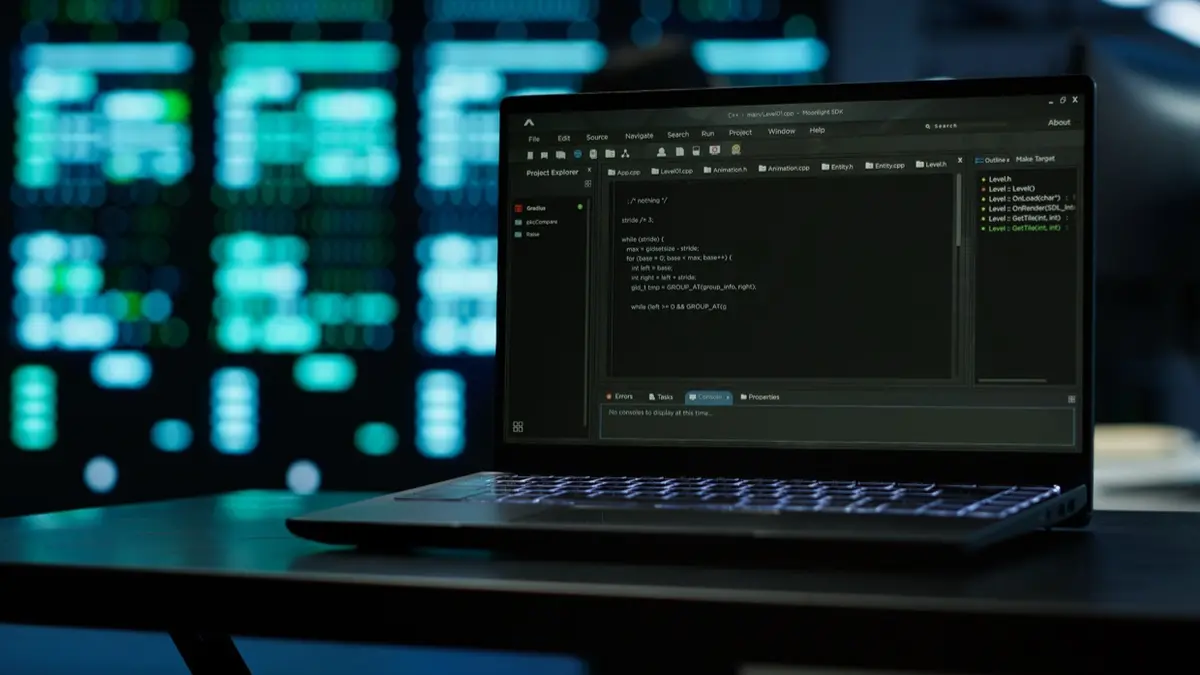
AI-driven analysis reads 100% of your codebase to detect and prioritize vulnerabilities, with expert manual validation. Supports .NET, Java, PHP, Python, and Node.js.
A high-level scan across your digital estate for missing patches and misconfigurations — ideal as a recurring baseline between deeper engagements.
Talk to our security engineers. We'll help you scope the right test — Red Team, pentest, or code review — based on your infrastructure, stack, and compliance needs.

Every engagement follows a structured, industry-standard methodology so results are consistent, defensible, and easy to act on. Web application testing is aligned to the OWASP Top 10 (2021), and all findings are scored using CVSS v4.0.
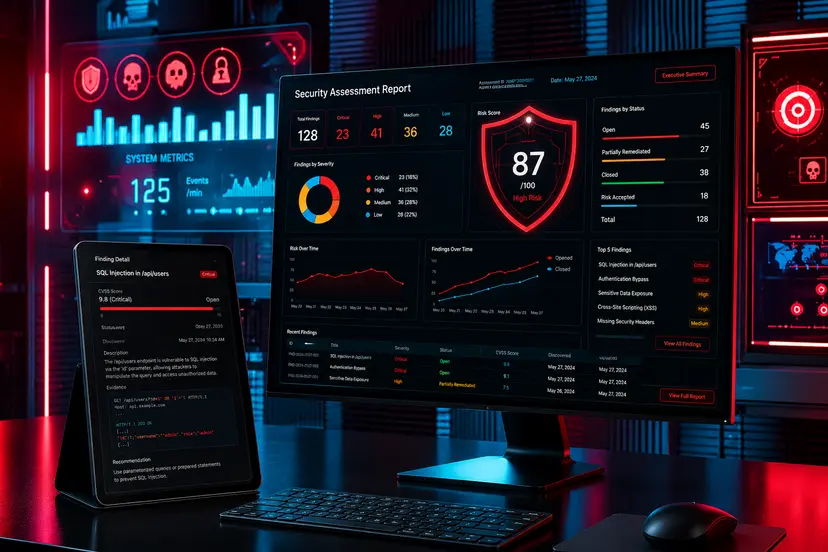
Every engagement concludes with an executive summary of business risk, a severity breakdown of all findings, step-by-step reproduction and evidence for each issue, and concrete remediation guidance. Findings are tracked through statuses — Open, Closed, Partially Remediated, or Risk Accepted — so progress is transparent from first draft to final retest. We pair manual expertise with best-in-class tooling including Burp Suite, Nmap, Metasploit, Nuclei, SQLMap, ffuf, and Dirsearch.
A comprehensive breakdown of modern offensive security testing — from full-scope adversary simulation to targeted application and infrastructure assessments.
Targeted testing of a specific feature, a small web app, or a small external footprint.
A standard deep-dive web app assessment, or internal Active Directory / complex network testing.
Full-scale Red Team operations or complex white-box testing.
Targeted testing of a specific feature, a small web app, or a small external footprint.
A standard deep-dive web app assessment, or internal Active Directory / complex network testing.
Full-scale Red Team operations or complex white-box testing.
Book a free, no-obligation scoping call. Tell us what you're building and what keeps you up at night — we'll recommend the right engagement and return a tailored scope, timeline, and quote.
Request a Free Scoping Call